
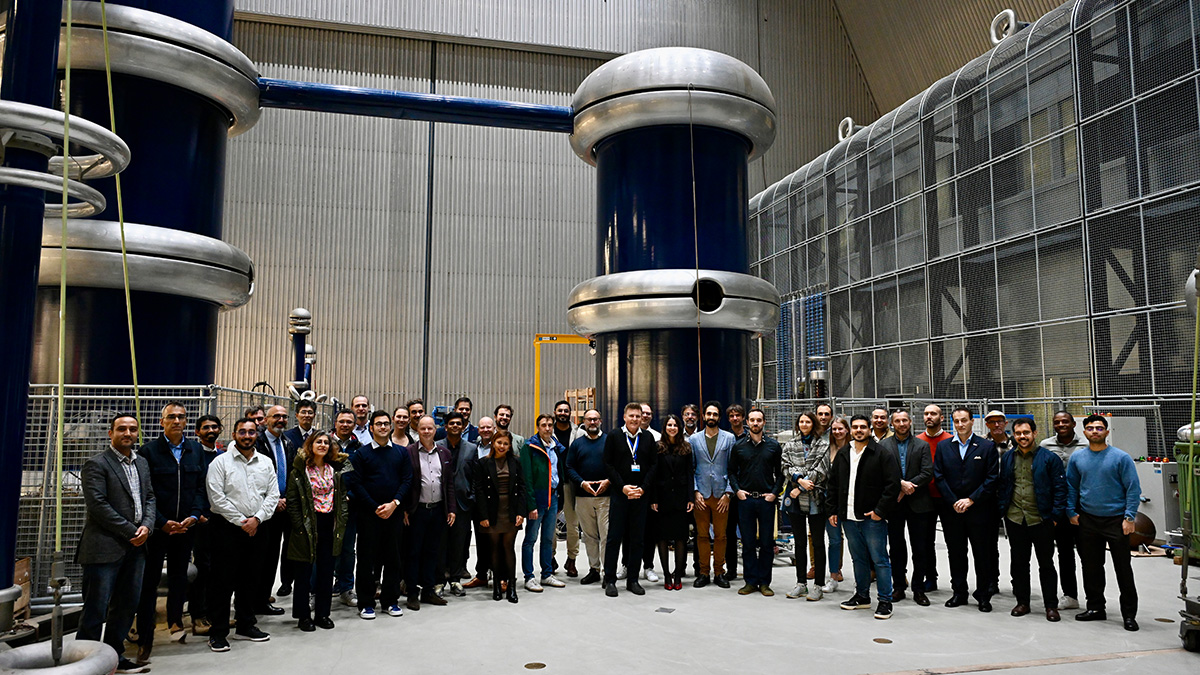
From 13 to 15 October, the InterOPERA consortium met in Delft, the Netherlands, for its 7th General Assembly. Hosted at TU Delft, the meeting brought project partners together to review progress and discuss how InterOPERA results can support the next steps towards interoperable multi-vendor, multi-terminal HVDC grids in Europe.
The General Assembly was preceded on 12 October by a dedicated workshop on the compliance verification process for multi-vendor, multi-terminal HVDC subsystems.
The first day focused on the progress of the InterOPERA demonstrator and the interaction-study activities supporting it. Partners reviewed developments on modelling and simulation, dry-run testing, frequency-domain analysis and compliance verification. Participants also visited the TU Delft laboratories, where part of the project’s testing and validation activities are being carried out.
The second day focused on how InterOPERA’s technical results can be translated into future procurement processes. Discussions covered the pre-tender phase, the integration of interaction studies into procurement and project execution, contractual and governance aspects, modular technical specifications and the Multi-Party Cooperation Framework.
On the final day, the consortium addressed remaining interoperability issues, reviewed progress on recommendations related to the Network Code HVDC, and discussed communication, dissemination and exploitation activities, including the latest development of the InterOPERA Exploitation Plan.
Particular attention was given to the project’s gap analysis, identifying the technical, organisational, legal and procurement challenges that will remain after InterOPERA. This work will help connect the project’s results with the next phases of the wider Interoperability Workstream, including the planned pre-specification phase and, ultimately, the first industrial-scale multi-vendor HVDC projects.
The 7th General Assembly marked another important step in moving from the development and testing of interoperability solutions towards their practical application in future European offshore grid projects.